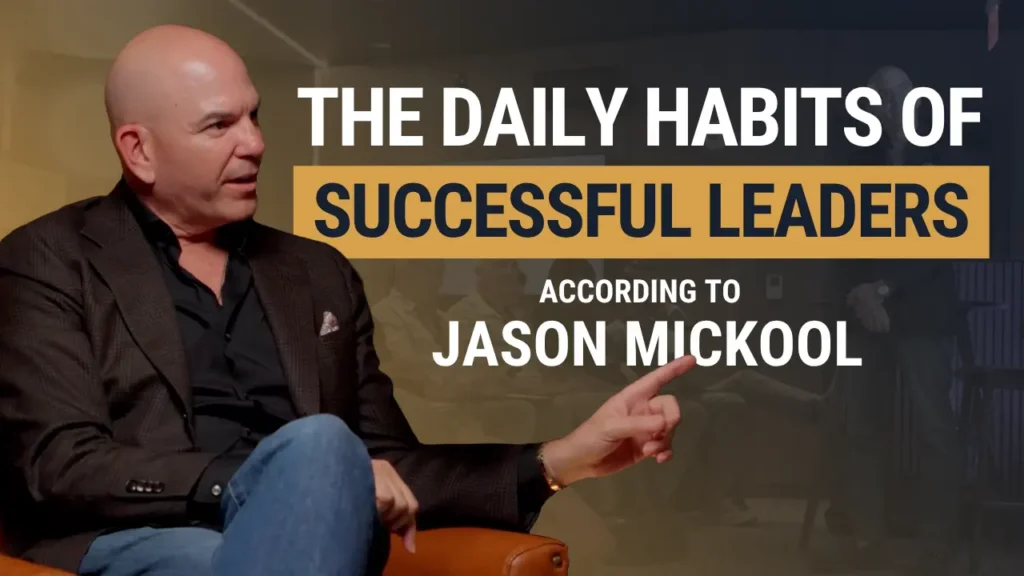
Most founders do not lose control of their business in a single moment. They lose it gradually, as the company grows faster than the leadership structure underneath it. Jason Mickool, founder of Greatness Lab and author of Built to Lead, Built to Scale, argues that the problem is rarely strategy. It is the leadership habits, communication patterns, and accountability systems that fail to keep pace as complexity increases.
This is the question that drives much of his work with insurance and financial professionals: what allows a business to stay effective, aligned, and stable as responsibilities expand and the founder can no longer touch every decision?
Key takeaways
- Founders lose control gradually, when complexity outpaces the leadership structure, not because strategy is wrong.
- Organizational strain usually begins internally, in communication and decision habits, before it shows up in operations.
- Businesses that scale build accountability systems and develop leaders, so the company runs without constant founder oversight.
- Mindset at the top sets the pattern, organizations tend to mirror the leadership behaviors established by their founders.
Why Leadership Challenges Usually Begin Internally
Organizational strain almost always begins before it appears in operations. Many companies pour attention into external growth while the internal habits that shape culture go unmanaged. The decision-making patterns, the communication rhythms, the way leaders behave under pressure, these set the foundation, and when they go unattended the cracks widen as the business grows.
Alignment weakens. Communication turns inconsistent. Leaders slip into reactive decisions instead of intentional ones. As a business adds people, locations, and lines of responsibility, the absence of a clear operational and cultural foundation becomes harder to ignore. According to Mickool, leadership effectiveness depends on how leaders respond to pressure and uncertainty as those demands keep changing.
How to Build a Business That Runs Without the Founder
A recurring theme in Mickool’s work is building a business that functions without depending on constant founder oversight. Many companies perform well early because of direct involvement, fast decisions, and concentrated control. The trouble arrives later, when complexity grows faster than the leadership structure evolves to match it.
Sustainable leadership, in his view, means moving from reactive management to intentional organizational development. In practice that comes down to four areas:
The four foundations of a business that scales
- Communication that holds across teams, so information does not depend on the founder relaying it.
- Accountability systems that keep standards consistent when the founder is not in the room.
- Operational habits that remove unnecessary friction from everyday work.
- Cultural alignment that ties daily behavior to long-term priorities.
These four foundations let teams keep operating cohesively through rapid change, instead of stalling each time a decision needs the founder’s sign-off.
Why Mindset Shapes Organizational Stability
Mindset influences stability more than many leaders expect. Under pressure, executives default to short-term reactions, and over time that reactivity erodes communication quality, decision consistency, and direction. Mickool encourages leaders to notice how their internal habits drive external outcomes.
He focuses on practical behavior over motivational language: holding consistency during uncertainty, building disciplined routines, communicating with clarity under pressure, and making decisions with long-term awareness. Organizations tend to mirror the leadership patterns set at the top, which makes leadership development an operational concern, not a personal one.
Turning Leadership Principles Into Operational Practice
In Built to Lead, Built to Scale, Mickool examines how leadership behavior, organizational structure, accountability, and long-term effectiveness connect. The book treats leadership through a practical business lens, looking at how leaders turn principles into operational consistency instead of framing success as personality or motivation.
That framing continues to resonate with founders and executives working inside complex, fast-moving environments. As workplace expectations and operational demands shift, his argument is that leaders gain more from building durable organizational foundations than from chasing short-term momentum.
Why Sustainable Leadership Continues to Matter
Mickool’s broader message stays consistent: businesses rarely remain effective on strategy alone. Long-term stability depends on leadership consistency, operational clarity, and the ability to hold alignment as the environment grows more demanding. For anyone navigating uncertainty and growth at once, that focus on foundations over momentum is where durable results come from.
Frequently Asked Questions
You scale without losing control by building leadership structure ahead of complexity. That means accountability systems, consistent communication, and developed leaders who can make good decisions without the founder in the room, so growth does not outpace the organization’s ability to run itself.
Leadership problems get worse during growth because complexity increases faster than the leadership structure evolves. Habits that worked when the founder touched every decision break down once there are more people, locations, and responsibilities than one person can oversee.
It means the business keeps performing when the founder steps back, because decisions, standards, and communication do not depend on the founder personally. Accountability systems and developed leaders carry the work that direct founder involvement used to carry.
Yes. Mindset affects operations directly because organizations mirror the patterns leaders set at the top. When leaders react short-term under pressure, teams absorb that reactivity, which shows up in inconsistent decisions and weaker communication across the business.
Build the Structure Before You Need It
Control is not about doing more yourself. It is about building an organization that holds its standards as it grows. That is the work Jason Mickool focuses on with the leaders he coaches.
Keep going
- Read Built to Lead, Built to Scale: How Modern Leaders Turn Businesses into Platforms.
- Explore the coaching and growth ecosystem at Greatness Lab.
- Learn more about Jason Mickool’s work and writing.
About Jason Mickool
Jason Mickool is the founder of Greatness Lab and the author of Built to Lead, Built to Scale. He built a national advisor enterprise spanning more than a dozen states before turning his focus to helping insurance and financial professionals develop leaders, build accountability systems, and scale organizations that last. More at jasonmickool.com.